I needed to be told the story to fully appreciate it. I wasn’t a fan of Cassandra Khaw’s Nothing But Blackened Teeth when I first read it. The audiobook changed my mind. Its narrator, Suehyla El Attar gave Cassandra’s words a rhythm and an “oomph” that the voice in my head could not.
Listening. I developed an appreciation for the poetry in Cassandra’s writing. Her descriptions do more than detail an action or object. They inform how that action or object’s meaning (as well as some melodramatic flair). For example, this is how Cassandra describes the act of Phillip, her rich American character, taking off his shoes and putting on a pair of slippers before entering the house:
[He] traded his Timberlands for the pair of slippers he’d bought at a souvenir shop at the airport. It’d cost him too much, but the attendant, her lipstick game sharp as a paper cut, had thrown in her number, and Phillip always folds for wolves in girl-skin clothing.
Phillip didn’t take off his boots and put on slippers. He “traded” his American customs for Asian ones. He overpaid for the slippers at the airport because the salesperson flirted with him. It’s Cassandra’s update of the idiom of being “a sucker for a pretty face.” (or should I say Cat’s?)
Cat is the narrator of Cassandra’s story. She spent six days at a mental health clinic and six months isolating herself from her friends to bring her life back in order. Before that she and friends (Phillip, Lin, Faiz, and Talia) haunted ghosts anywhere in their native Kuala Lumpur where there were rumors of hauntings.
Phillip has gathered the friends together to celebrate Faiz and Talia’s wedding. Talia has always dreamed of getting married in a haunted house, so Phillip has rented a haunted mansion in Japan and provided all of them with all-expense-paid tickets to get there.
The reunion drama is immediate. As soon as Cat arrives at the mansion it’s revealed that she and Phillip were in a relationship that ended poorly. She brings it up in the context of a snarky comment. He apologizes. She says she’s over it though she was the one that brought it up. Talia is not happy Cat is among the invitees. She holds a grudge against Cat for trying to break her and Faiz up. Cat says she was only trying to help. They were each so miserable together at the time. Cat also dated Faiz briefly. And Lin.
Enclosed in Talia’s ribs was an entire vocabulary of sighs, each one layered with delicate subtleties, every laboured exhalation unique in its etymology.
Cat’s description of Talia is one of my favorites because it is so well layered. The words are beautiful. Light and airy while simultaneously dense with inference. Talia does not like Cat but it’s clear the feeling is not mutual. Cat admires Talia. Is jealous of her.
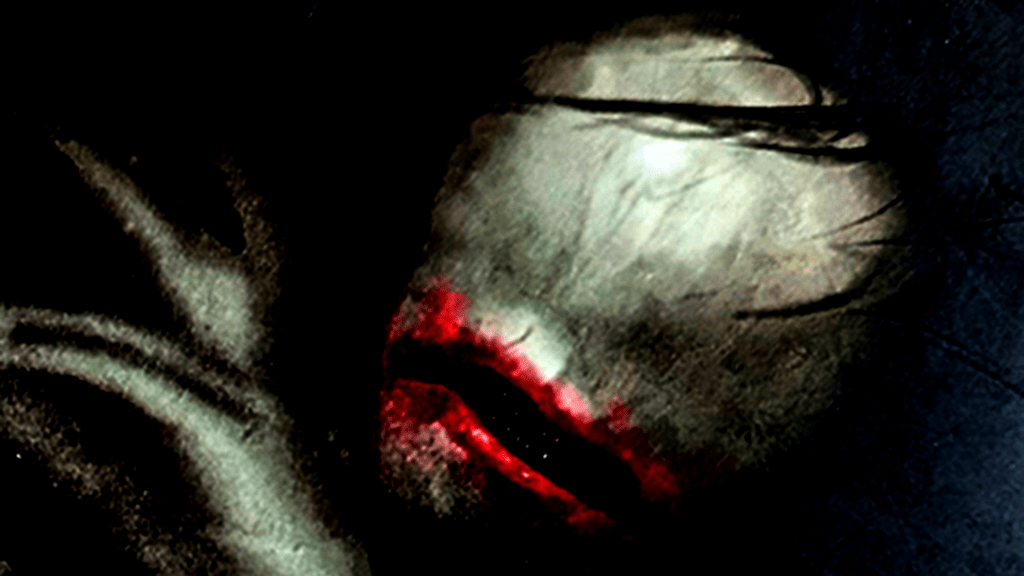
When asked about the mansion’s ghost, Phillip tells the friends that the ghost was a bride whose groom died on his way to their wedding. When the bride hears about it she asks her wedding party to bury her alive in the mansion’s foundation. She wants to wait for him to arrive. To keep her from getting lonely while she waits, each year after a new girl was buried alive in the walls of the mansion.
Suenomatsuyama nami mo koenamu.
The words the ghost repeatedly whispers are from a poem about love and dedication. According to Reddit, the ghost’s words translate roughly to “Beside you, if I have a mind for another (lover), then tsunami will hit Suenomatsuyama.” After the group’s first encounter with the ghost bride, Cat realizes the bride is repeating a line from a famous poem.
That’s the poem. The thing she keeps repeating. It’s part of a poem. She’s still waiting for her husband-to-be, after all these years, she’s hanging on to the hope he’s coming home.
Since the audiobook, I have re-read Nothing But Blackened Teeth in its entirety and in parts several times. At just 124 pages it’s easy to do. Each time I read it, the ending becomes more sad, more tragic, more gruesome a comment on human nature. The ghost bride’s vow is a mirror that the reader can use reflect on the friends’ moral dynamics (or lack thereof).

 Vincent Young
Leave a comment